
*Some of the links below are Amazon Affiliate links. If you purchase through them, I may earn a small commission at no extra cost to you*
Have you ever looked at chore charts on the internet and your eyes glaze over? Like, do we need to give them a sticker for each day they complete their chores? That seems like it would just add another thing to my to-do list.
The purpose of my kids doing chores isn’t just to keep the house tidy—it’s to help me out while teaching them responsibility. I wanted my children to have a real-life experience with chores: they would be paid, held to expectations for their character, and responsible for completing their tasks. Over the years, I’ve developed a simple system that accomplishes all of this while keeping our home running smoothly. The best part? It’s flexible, age-appropriate, and encourages children to take ownership of their tasks.

Daily, Weekly, and As Needed Chores
We divide our children’s chores into three categories: daily, weekly, and as needed. This keeps things organized and predictable, so kids know exactly what is expected:
- Daily chores: Making their beds, tidying rooms, unloading the dishwasher (one child gets the top rack, another the bottom rack) and clearing off the table after they eat.
- Weekly chores: Vacuuming, organizing and cooking dinner.
- As-needed chores: Putting away laundry and feeding pets.
By keeping chores categorized and simple, it’s easy for kids to remember them—and for parents to enforce them consistently.
Teaching Responsibility with Allowance
Our children earn $5 per week for completing their chores, broken down like this:
- $1 to give
- $2 to save
- $2 to spend
They usually save for something special, learning delayed gratification along the way. We like to use an organized system to put their money into, like this one.
We also have a system for attitude: complaining about chores results in $1 being deducted—first from spending money, then from savings if needed. Most weeks, no deductions are necessary, and the most we’ve ever deducted was $2. One week of losing spending money is usually enough to encourage a cheerful, cooperative attitude.
This isn’t about punishment—it’s about instilling a natural understanding of responsibility. Just like in the real world, if you don’t complete your work, you don’t get paid—or you only earn enough for necessities. Over time, this helps children develop a strong work ethic and respect for their responsibilities.
Summer Expectations
From June through August, we shift to summer expectations:
- Kids aren’t paid, giving them a little break.
- Completing chores earns them rewards like tablet time or playing with neighbors.
- They create their own summer chore lists using a template I found online (link here), which helps them take ownership of their responsibilities.
Keeping Chores Fresh
Every September, when I update the chore charts, I add one new task. I often browse Pinterest for age-appropriate ideas and choose what fits our family. To make it easier for you, I’ve created a downloadable chore chart template you can fill in for your own kids.

How to Use the Editable Chore Chart Template
I’ve made this chore chart template editable in Canva, so you can customize it for your own family without worrying about changing my original design. Just click the link, and Canva will prompt you to “Use Template”. This creates your own personal copy that you can edit—add your kids’ names, adjust chores, or change colors—without affecting the original template. It’s simple, fun, and fully customizable for your family’s needs!
Putting the Chore Chart to Use
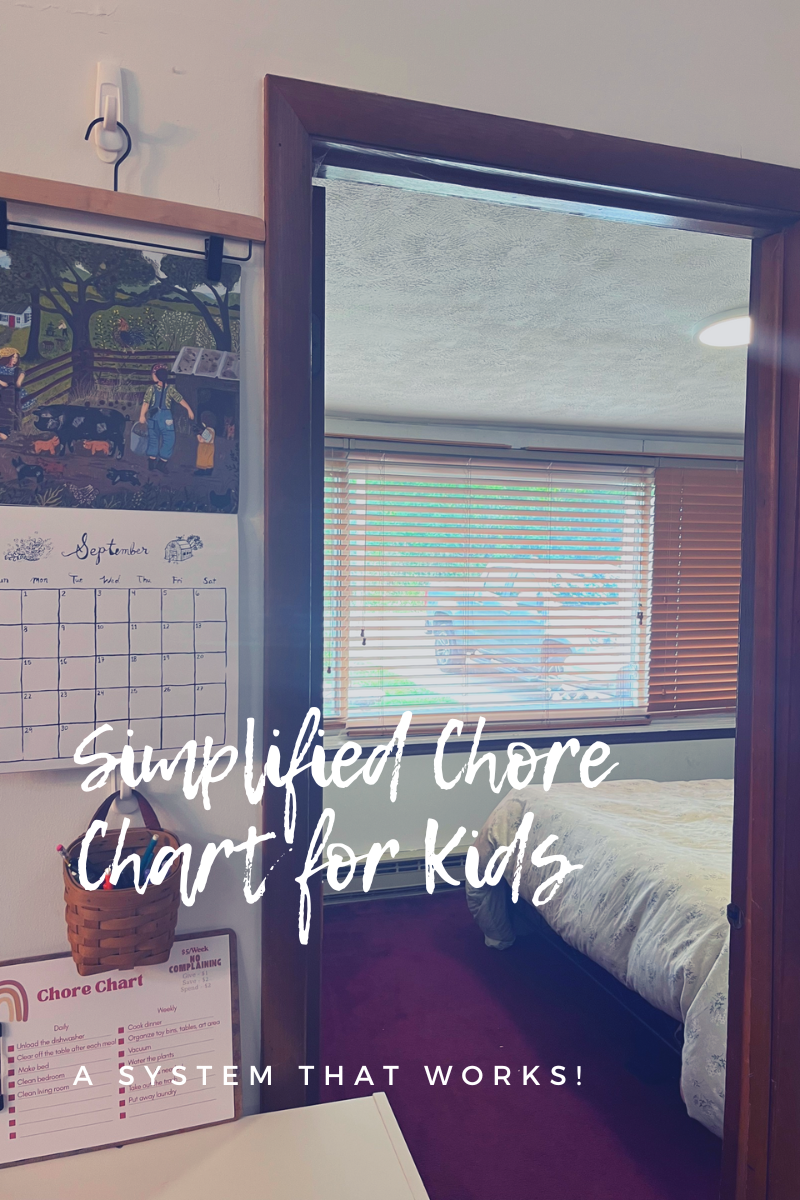
Once I’ve finished editing the chore chart template, I print it on cardstock, laminate it (I use this laminator), and hang it near our command center. This wall is in our main living area, so the kids pass it multiple times a day. Having the chart visible and accessible helps them remember their tasks, stay on track, and take ownership of their chores without me having to constantly remind them. From there the children can check off (if they choose to) with a wet erase marker what they have completed for the day/week. You would clean the daily checks daily, and the weekly ones would reset on Sunday (or your day of choice).
Conclusion
Chores don’t need to be a battle. With a simple, structured system, kids can learn responsibility, money management, and cheerfulness while helping your household run smoothly. By breaking chores into daily, weekly, and as-needed tasks, combining allowance with natural consequences, and giving them a sense of ownership, you’re helping your children build lifelong habits they’ll carry into adulthood.
Grab my free chore chart template to simplify chores in your home today—and make responsibility something your kids actually enjoy!